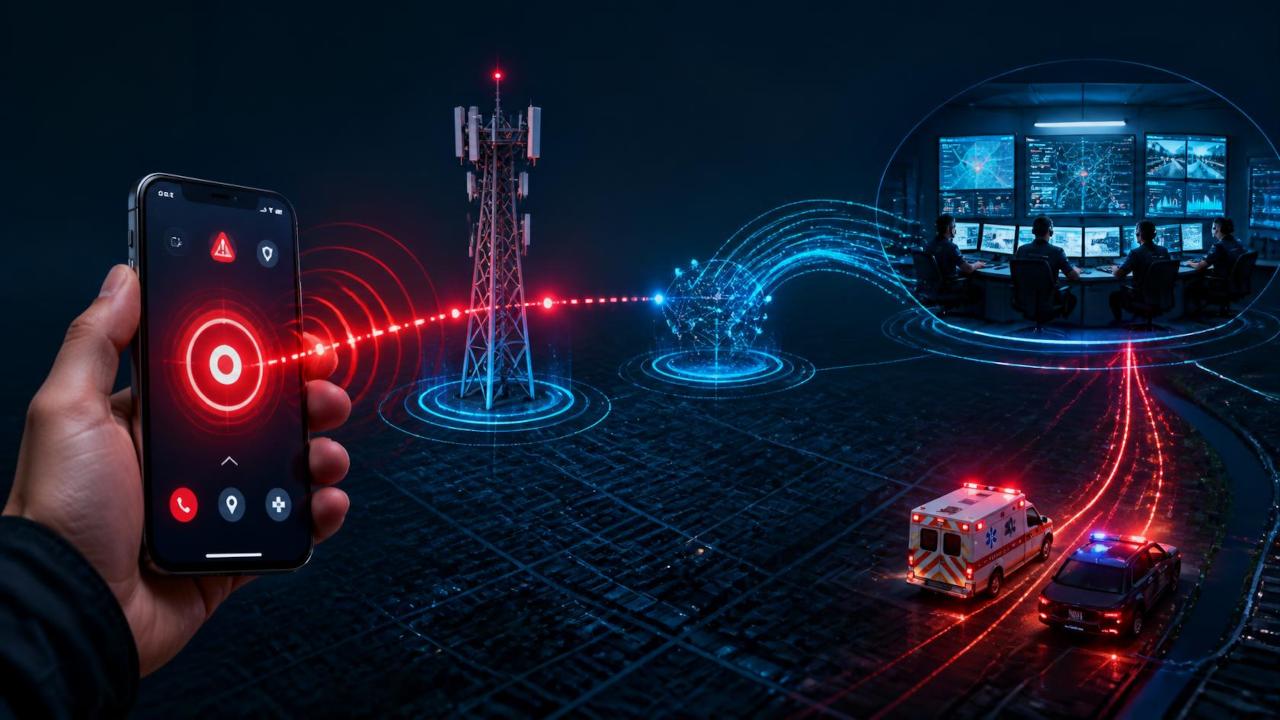
Have you ever wondered what actually happens when you dial an emergency number such as 112? You press the call button, but behind those few seconds is a communication system involving your phone, cellular network, emergency call routing and emergency response services.
An emergency call is designed to connect a person who needs immediate assistance with the appropriate emergency service. Depending on the country and emergency number, the call may be routed to police, fire and rescue services, ambulance services or another emergency response organization.
In India, 112 is the pan-India emergency number used to access emergency assistance. This article explains how emergency calls work, what happens after you dial 112, how mobile networks handle emergency calls, how location information can help responders and what you should know before making an emergency call.
What Is an Emergency Call?
An emergency call is a telephone call made to obtain immediate assistance during a serious or potentially life-threatening situation. Common examples include situations involving a medical emergency, fire, accident, crime or immediate danger to a person.
Emergency calling is different from an ordinary phone call because telecommunications networks and emergency response systems are designed to give these calls special treatment and connect them with emergency services.
What Is the Emergency Number in India?
India uses 112 as its pan-India emergency number. The Emergency Response Support System, commonly known as ERSS, was introduced to provide a unified emergency response mechanism.
| Emergency Service | Purpose | Emergency Number |
|---|---|---|
| Police | Crime, immediate threats and law-and-order emergencies | 112 |
| Fire & Rescue | Fire and rescue emergencies | 112 |
| Ambulance / Medical | Medical emergencies and situations requiring urgent medical assistance | 112 |
| Unified Emergency Response | General emergency assistance | 112 |
How Does an Emergency Call Work?
The emergency call process can be understood as a series of steps. Although the exact technical implementation can vary between networks and devices, the basic process begins when you enter the emergency number and press the call button.
Step 1: You Dial the Emergency Number
The process starts when you dial an emergency number such as 112. Modern smartphones can recognize emergency numbers and provide special emergency-calling functions through the phone's operating system.
Step 2: Your Phone Searches for a Network
Your phone attempts to establish communication with a cellular network. Under certain circumstances, emergency calling can be possible even when your phone is not connected to your normal mobile operator, provided that a compatible network is available and the relevant emergency-calling functionality is supported.
This is one reason emergency calls can behave differently from normal calls. The phone and network can prioritize establishing an emergency connection when the required network conditions are available.
Step 3: The Network Recognizes the Emergency Number
The cellular network identifies that the number being dialed is an emergency service number. The network then handles the call according to emergency-calling rules and routes it toward the appropriate emergency response system.
Step 4: The Emergency Call Is Routed
The call is routed through the telecommunications infrastructure toward an emergency response center or the system responsible for handling emergency calls in that area.
The routing process is important because emergency calls need to reach the correct response organization and location. Depending on the emergency system, the call can then be handled by trained personnel who determine what assistance is required.
Step 5: An Emergency Operator Answers
Once the call reaches an emergency response operator, the operator will normally ask questions to understand the situation and determine what type of assistance is required.
- What happened?
- Where is the emergency?
- Is anyone injured or in immediate danger?
- What type of help is required?
- Are there any immediate hazards?
Step 6: Emergency Services Are Dispatched
After collecting the necessary information, the emergency response system can coordinate the appropriate emergency service. Depending on the situation, this may involve police, fire and rescue personnel, medical responders or more than one service.
How Does Your Phone Location Help During an Emergency?
Location information can be extremely important during an emergency, particularly when a caller does not know their exact address or is unable to communicate clearly.
A smartphone can determine its position using technologies such as GPS, Wi-Fi positioning and cellular network information. Emergency location systems can use available location information to help emergency responders determine where assistance may be needed.
Does an Emergency Call Need a SIM Card?
Emergency calling behavior without a SIM card depends on the country, network and device. Some mobile networks and phones can allow emergency calls without a normal subscriber connection when an available network supports emergency calling.
However, you should not assume that an emergency call will always work without a SIM card. Network availability, device support, local regulations and telecommunications configuration can affect whether the call can be completed.
Can You Make an Emergency Call Without Mobile Balance?
Emergency calls are generally treated differently from ordinary paid calls. A lack of prepaid balance does not necessarily prevent an emergency call from being attempted when emergency calling is supported.
What Happens If There Is No Signal?
An emergency call still requires a suitable radio connection to a cellular network. If your phone cannot reach any compatible cellular network, it may not be possible to complete the call.
If your normal operator has no coverage but another compatible network is available, emergency calling may be possible depending on local network support and regulations. However, a completely unreachable area can prevent any cellular emergency call from connecting.
Can Emergency Calls Work With Airplane Mode?
Airplane Mode normally disables the phone's cellular radio. Therefore, an emergency call generally cannot be placed while cellular connectivity is disabled. Some devices and configurations may allow specific radios to be manually re-enabled while Airplane Mode remains active.
What Happens If You Accidentally Call 112?
If you accidentally call an emergency number, do not simply hang up if the call has connected. Stay on the line and explain to the operator that the call was accidental. This helps the operator determine whether an emergency actually exists.
What Should You Say During an Emergency Call?
During an emergency call, try to remain calm and provide clear information. The most important information is usually your location and what has happened.
- Clearly describe the emergency.
- Give your exact location or the nearest identifiable landmark.
- Tell the operator whether anyone is injured.
- Follow the operator's questions and instructions.
- Do not hang up until the operator tells you that the call can end.
Why Is Your Location So Important?
A person experiencing an emergency may be unable to describe their location accurately. They might be unfamiliar with the area, inside a large building, traveling on a highway or unable to speak because of the situation.
For this reason, location information from the phone and network can complement the information provided verbally by the caller. However, location technology should not be treated as a replacement for telling the emergency operator where you are.
Emergency Calls on Smartphones
Modern Android and iPhone devices include dedicated emergency and safety features. Depending on the device, users may be able to access emergency calling, emergency contacts, location sharing and other safety functions from the lock screen or through hardware buttons.
Because emergency features differ between manufacturers and operating-system versions, it is a good idea to check your phone's emergency and safety settings before an emergency occurs.
Emergency Call vs Normal Phone Call
| Feature | Emergency Call | Normal Call |
|---|---|---|
| Purpose | Obtain urgent emergency assistance | General communication |
| Routing | Handled using emergency-calling procedures | Routed as a normal telephone call |
| Emergency service | Connected to emergency response system | Connected to another telephone user or service |
| Location importance | Extremely important for dispatch | Usually not required |
| Payment | Emergency calls are generally handled differently from ordinary paid calls | May require an active service plan or balance |
How Emergency Calling Technology Has Evolved
Emergency calling has evolved significantly from traditional landline-based systems. Modern emergency communication can involve cellular networks, smartphones, satellite positioning, Wi-Fi positioning, automated location information and digital emergency response systems.
The development of smartphones has also made it possible to provide additional safety features beyond a simple voice call, including emergency location sharing, emergency contacts and automated safety alerts on supported devices.
What If You Cannot Speak During an Emergency?
If you are unable to speak, the available options depend on the emergency system, device and local services. Some emergency systems support text-based or other communication methods, while modern smartphones may also provide emergency SOS and location-sharing features.
If you are able to communicate, providing your location and explaining that you are unable to speak normally can help emergency personnel understand the situation.
Emergency SOS Features on Smartphones
Many modern smartphones include an Emergency SOS feature. These features can allow users to quickly contact emergency services and, depending on the device and configured settings, notify emergency contacts or share location information.
The exact activation method varies between Android phones, iPhones and individual manufacturers. Before relying on Emergency SOS, check how it works on your specific phone.
Common Misconceptions About Emergency Calls
| Myth | Reality |
|---|---|
| Emergency calls always work without any network | A suitable cellular connection is still required for a cellular emergency call. |
| GPS alone handles emergency location | Emergency location can involve GPS, cellular and Wi-Fi technologies. |
| You should hang up after an accidental emergency call | If connected, stay on the line and explain that it was accidental. |
| Emergency operators automatically know everything about you | Available caller and location information depends on the device, network and emergency system. |
| Emergency numbers can be called for testing | Unnecessary emergency calls can interfere with emergency response operations. |
How to Prepare Your Phone for an Emergency
- Know the emergency number used in your country or region.
- Keep your phone charged whenever possible.
- Set up emergency contacts on your smartphone.
- Learn how to activate Emergency SOS on your device.
- Keep location services configured according to your safety needs.
- Know important locations such as your home, workplace and frequently visited places.
- Do not make unnecessary emergency calls.
Frequently Asked Questions
How does an emergency call work?
When you dial an emergency number, your phone attempts to connect through a compatible cellular network. The network recognizes the emergency number and routes the call to the appropriate emergency response system. Location information may also be available to help emergency responders.
What happens when you call 112 in India?
When you call 112 in India, the call is handled through India's emergency response system. An emergency operator can gather information about the situation and coordinate the appropriate emergency assistance.
Can I call 112 without balance?
Emergency calls are generally treated differently from normal chargeable calls, so lack of prepaid balance does not necessarily prevent an emergency call. However, the ability to complete a call still depends on network availability, device support and applicable telecommunications rules.
Can I call 112 without a SIM card?
Some devices and networks can support emergency calls without a normal SIM-based subscriber connection, but this is not guaranteed in every situation. Network availability, device configuration and local regulations matter.
Can emergency services find my location?
Location information can be available through technologies such as GPS, cellular networks and Wi-Fi positioning. The exact information available to emergency services depends on the device, network and emergency response system.
What should I do if I accidentally call 112?
If the call connects, remain on the line and tell the operator that you called accidentally. Do not make repeated calls simply to test the service.
Does an emergency call use the internet?
Traditional emergency voice calls use telecommunications networks rather than requiring a normal internet connection. Modern emergency systems can also use IP-based technologies and smartphones can use internet-based services for certain additional emergency features.
Can I make an emergency call with no signal?
A cellular emergency call requires access to a compatible cellular network. If there is no reachable cellular network at all, the phone cannot establish a normal cellular emergency call.
Final Thoughts
An emergency call may look like an ordinary phone call from the user's perspective, but a complex system works behind the scenes. Your phone, cellular network, emergency routing infrastructure and emergency response center work together to connect you with the help you need.
In India, 112 provides a unified emergency number for urgent assistance. Knowing how emergency calls work, understanding your phone's Emergency SOS features and keeping your location information available can help you respond more effectively during a real emergency.
Most importantly, use emergency services responsibly. During a genuine emergency, stay calm, provide your location, clearly explain what happened and follow the emergency operator's instructions.